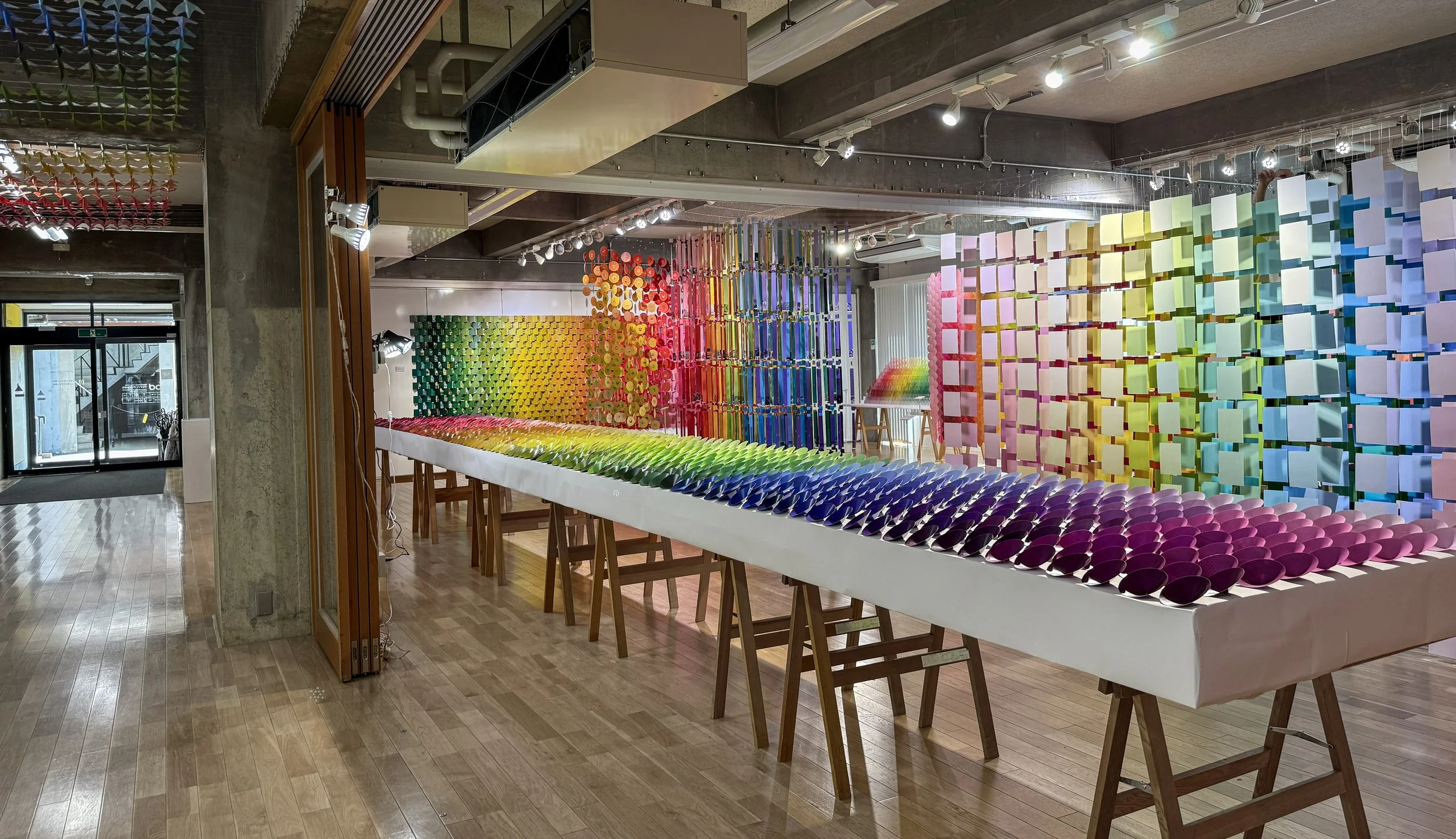
100 colors lab
Observe.
Collect.
Construct.
Understanding the world through color.
A research and educational platform founded by Emmanuelle Moureaux.
WHAT IS 100 COLORS LAB?
100 colors lab is a methodology for understanding the world through color.
Although we are surrounded by millions of colors, we often perceive them through a limited vocabulary: red, blue, yellow and green.
100 colors lab begins by looking more closely at the colors that already exist around us.
By observing subtle differences, we become aware of the richness, diversity and beauty of colors that often go unnoticed.
The goal is not simply to identify colors, but to become more aware of them.
Through observation, collection, comparison, classification, sequencing and construction,
color becomes a means of perceiving, thinking and creating — a way of seeing and understanding the world.
THEORY
DISCOVERY
Reading the world through color.
The world contains an infinite diversity of colors.
By becoming aware of their differences and relationships, color becomes a way of perceiving and understanding the world.
↔
CONSTRUCTION
Creating the world through color.
Color is not only something we see.
Through relationships, sequences and layers, color becomes a medium for constructing space and experience.
METHOD
The method moves between two complementary actions:
expanding perception and refining perception.
OBSERVE → COLLECT → COMPARE → CLASSIFY → SEQUENCE → CONSTRUCT → ARCHIVE
PHASE 01 — EXPAND
Discovering as many colors as possible.
Participants begin by observing colors in their surroundings and collecting samples from everyday life. Through repeated observation, they discover countless subtle variations that often go unnoticed.
The collected colors are compared, classified and sequenced, building individual palettes of approximately 1,000 colors.
Observation and collection expand perception, revealing the infinite diversity of color.
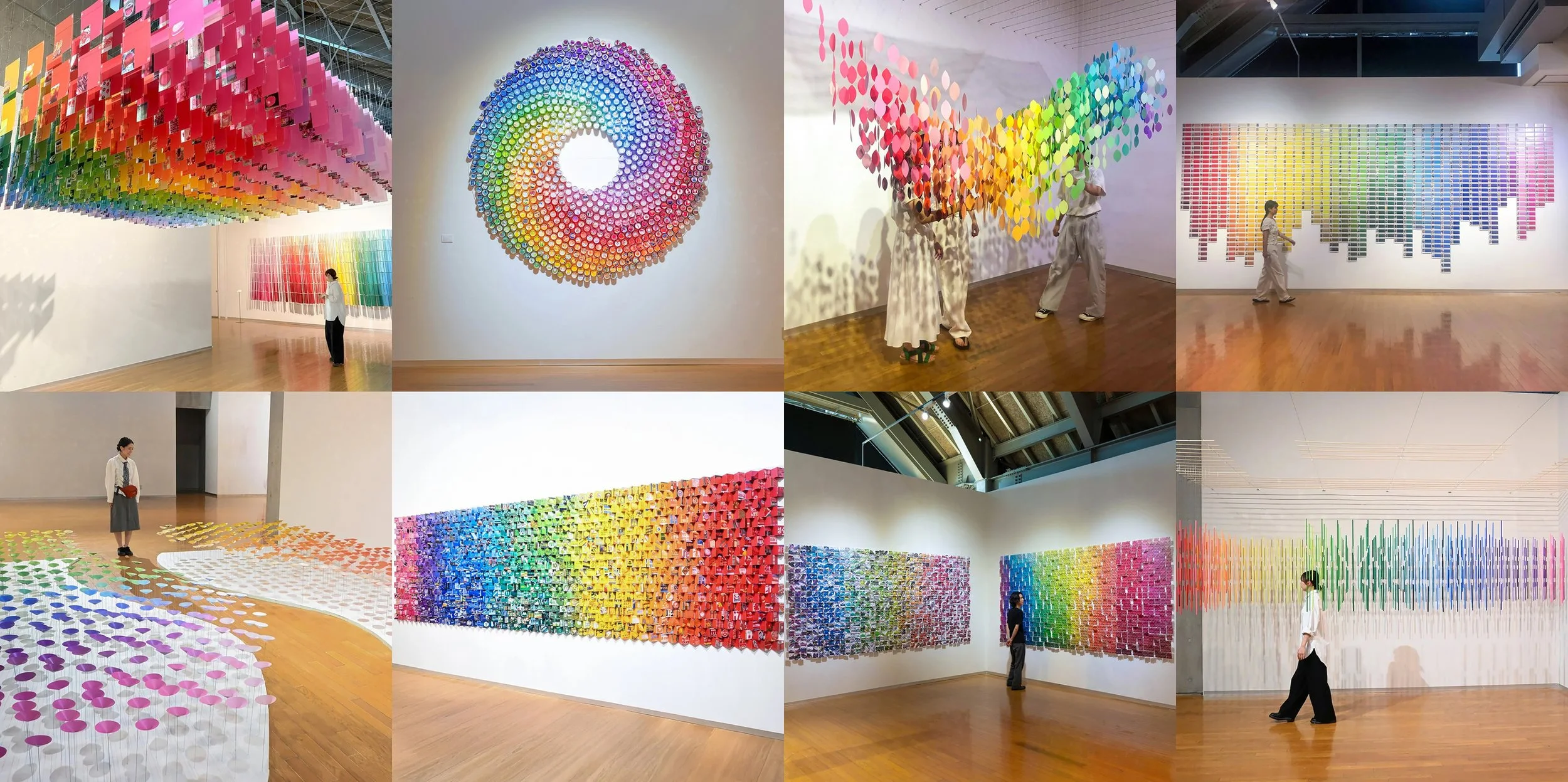
The palettes are first presented together as a collective display. They are then developed into three-dimensional installations, exploring how discovered colors can construct space.
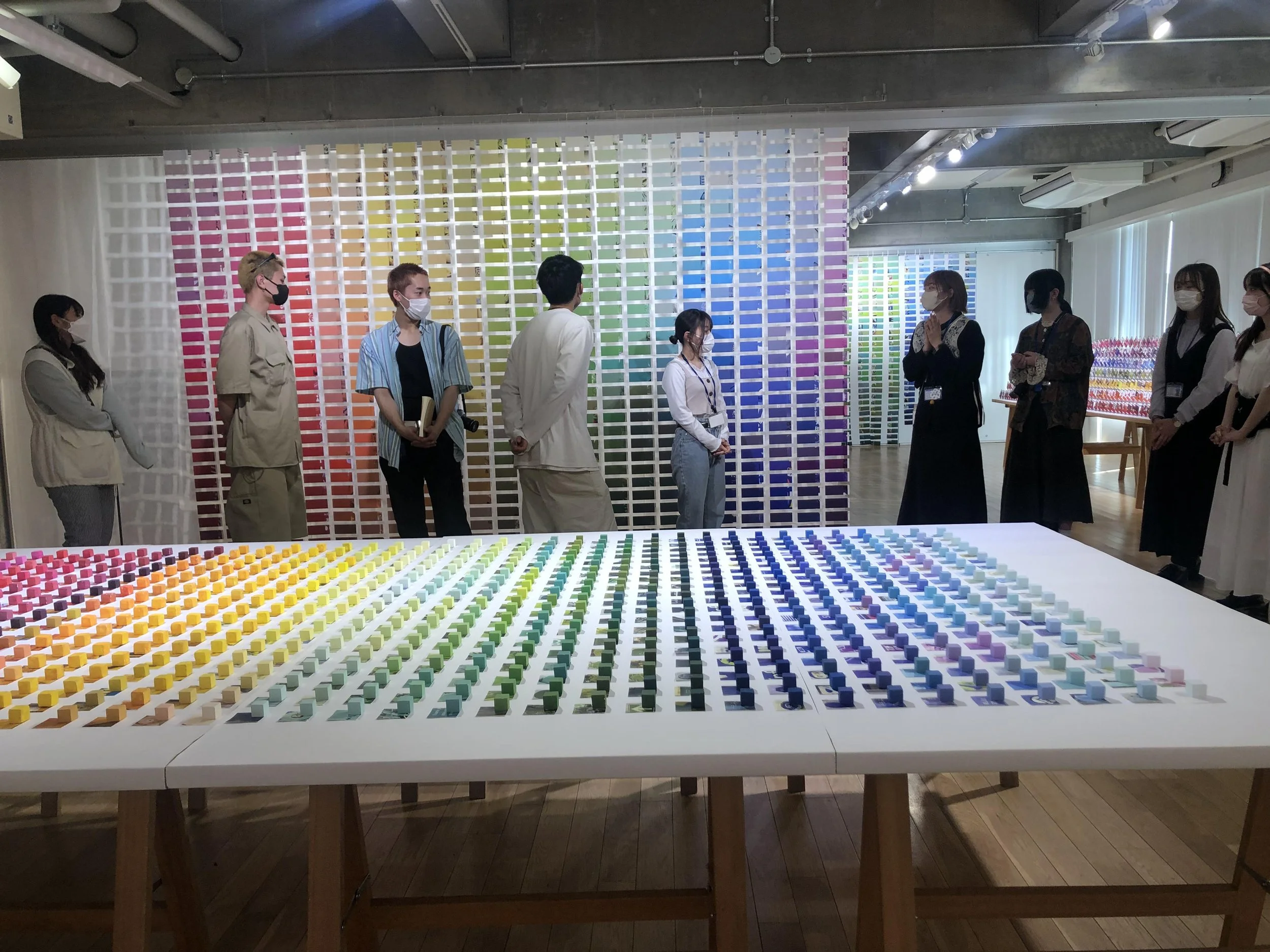
PHASE 02 — REFINE
Finding the most beautiful 100 colors.
After expanding their perception through thousands of colors, participants take the opposite approach: they refine.
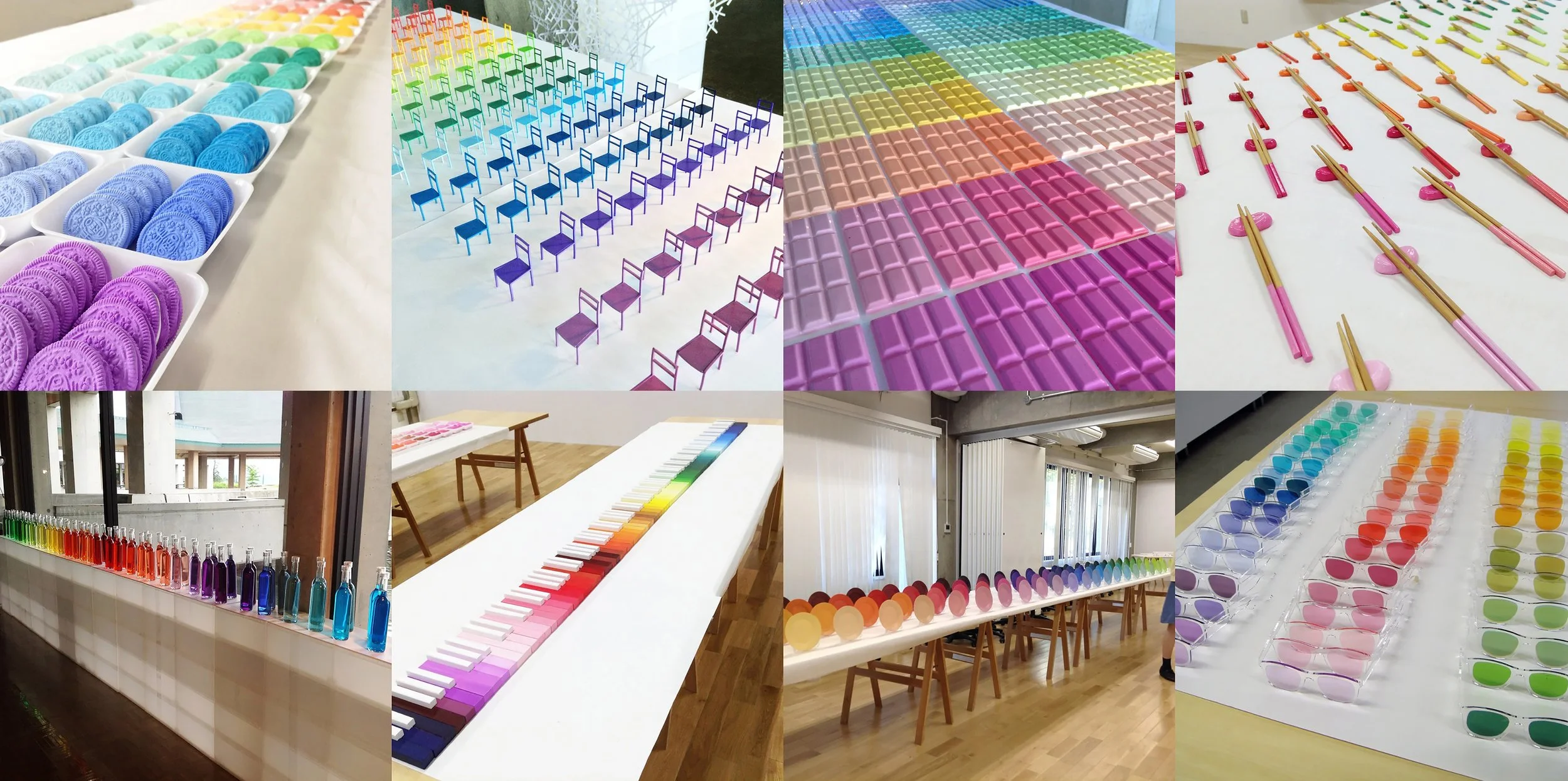
Through everyday objects, they search for and create 100 colors whose relationships form the most beautiful palette.
Through comparison, classification and sequencing, perception is gradually refined into a more precise understanding of color.
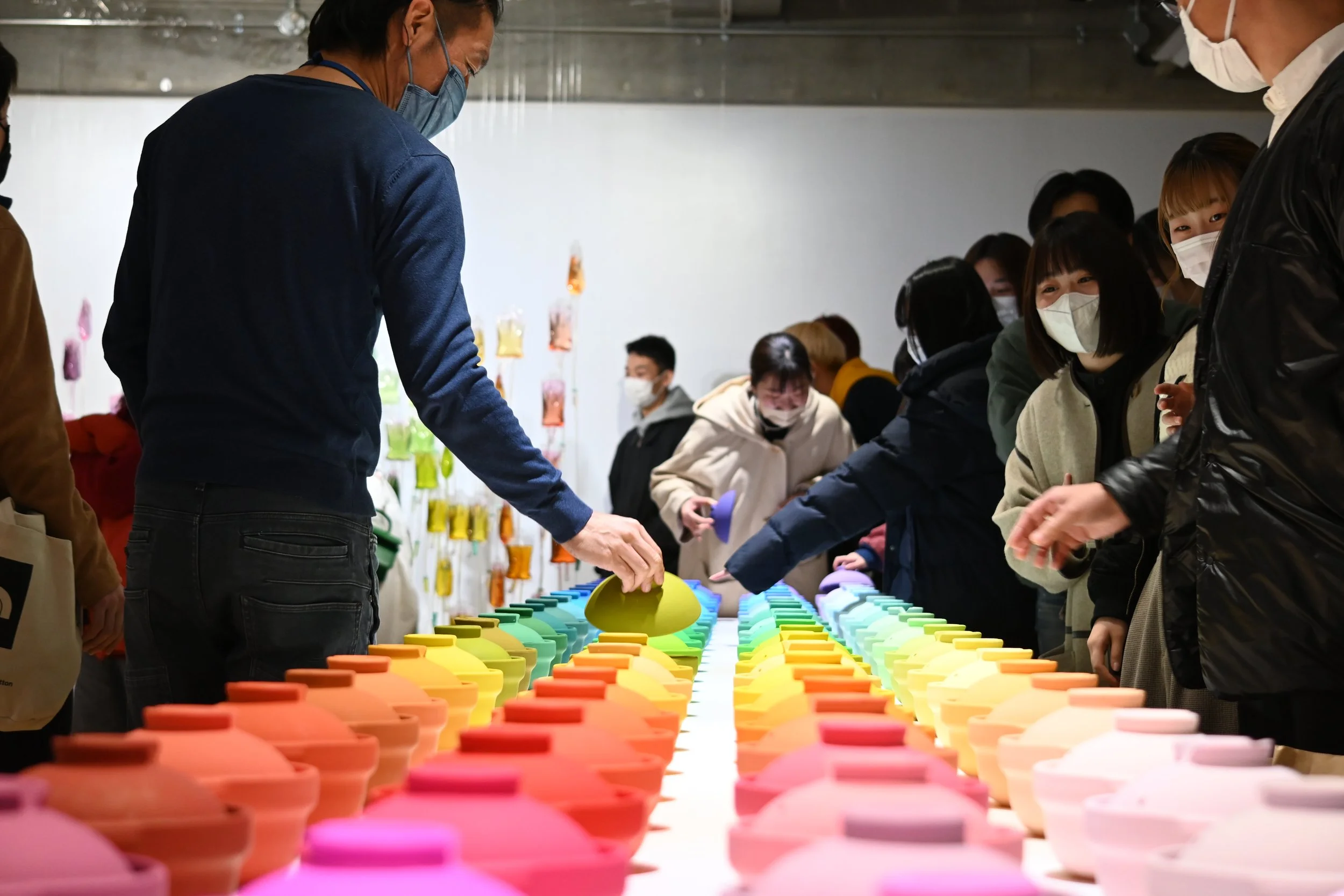
The process moves from seeing more colors to seeing color more precisely.
PRACTICES
Three complementary practices explore color from observation to construction.
01 — COLOR OBSERVATION
Observing and collecting colors from the world, recording their context, comparing their differences and developing a more precise awareness of color.
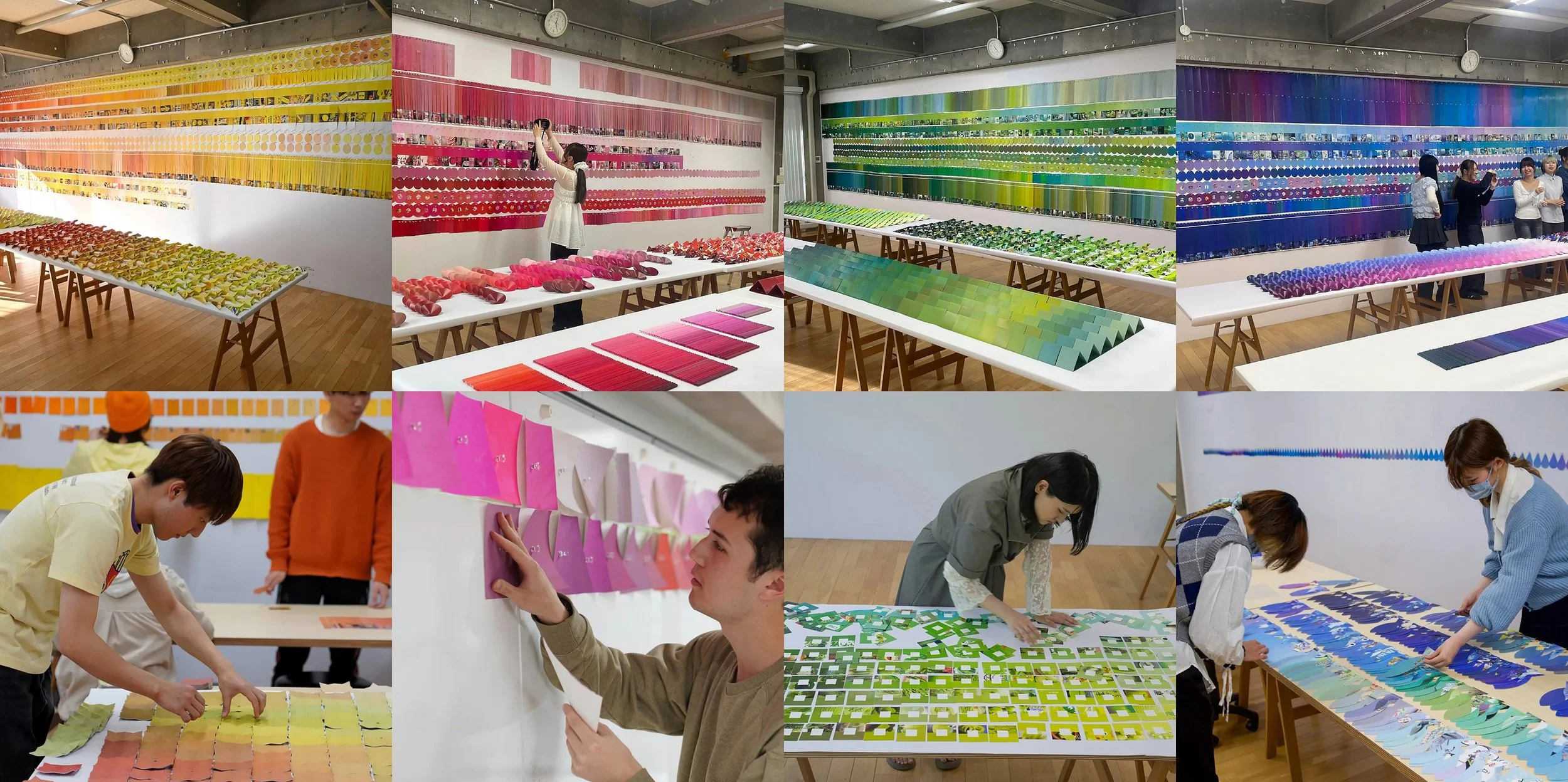
02 — 1000 COLORS INSTALLATIONS
Transforming the collected colors into a large-scale chromatic field and spatial experience.
03 — 100 COLORS OBJECT PALETTES
Creating one hundred distinct colors, designing their sequence and translating the resulting chromatic system into everyday objects.
FOUNDER
100 colors lab was founded by artist and architect Emmanuelle Moureaux.
Born in France and based in Tokyo since 1996,
Moureaux is internationally known for her exploration
of color as a medium for creating space.
She developed the concept of "shikiri" —
dividing and creating space through color.
For more than two decades, she has observed, collected, classified, and composed colors found in cities, landscapes, objects, and everyday life.
The same approach forms the foundation of 100 colors lab.
Originally developed as an educational project at Tohoku University of Art & Design, 100 colors lab has evolved into an ongoing platform for research, education, workshops, and creative exploration through color.
Through observation, colors become more than visual information.
They become a way of experiencing the world.
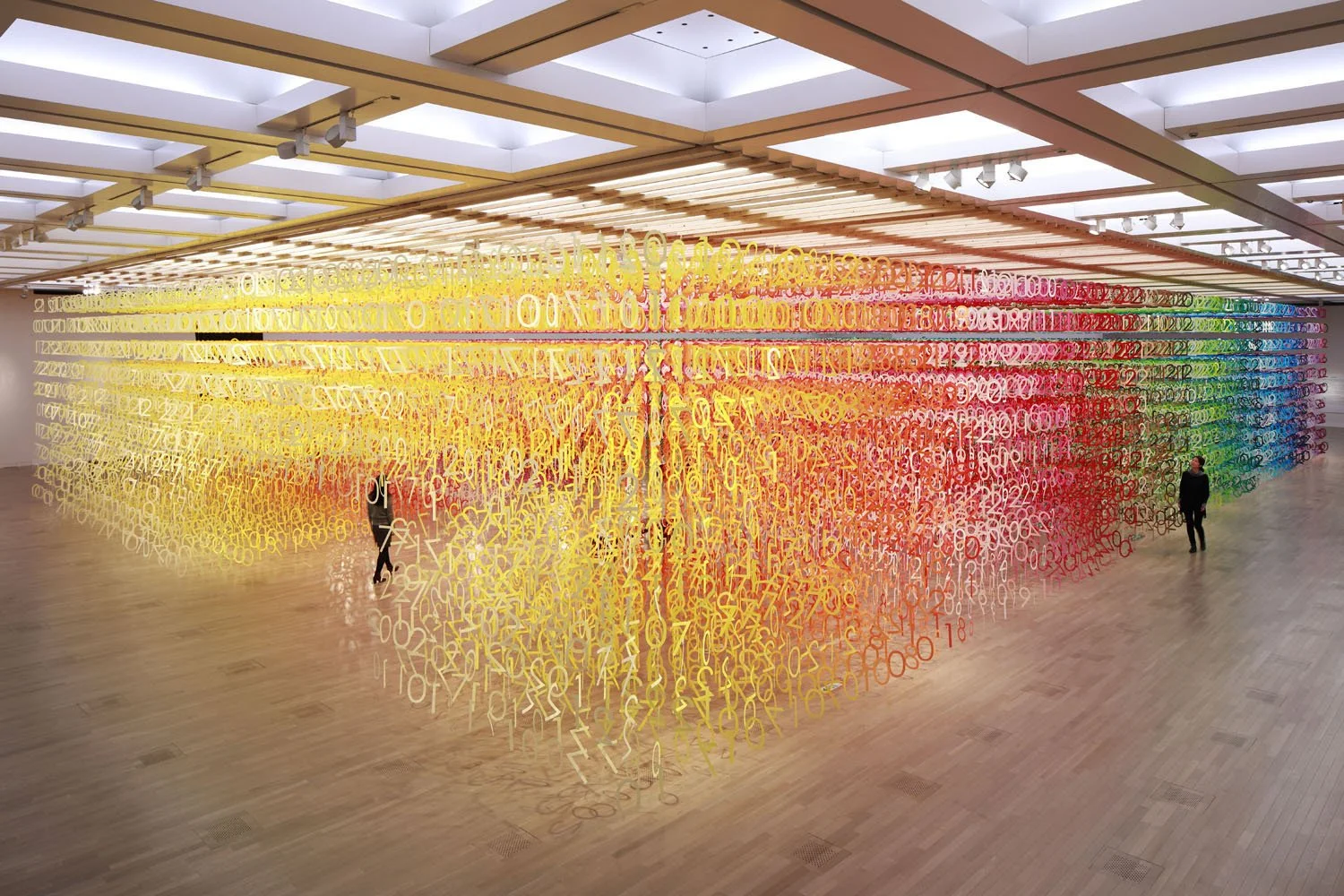
100 colors no.18 “Forest of Numbers”, The National Art Center, Tokyo, 2017.